Beyond the Beans: Summer Legume Options for Georgia Food Plots
Written by: Dr. James Johnson
Soybeans remain one of the most preferred and highest protein summer forages for white-tailed deer in Georgia. Despite this, they can be challenging to successfully establish and maintain, often requiring exclusion fences to limit early deer access. Heavy browsing pressure, especially on smaller acreage, frequently limits their productivity and reduces their reliability as a standalone food plot crop. Fortunately, there are several legume alternatives to soybeans that provide more consistent performance under a wider range of conditions without the hassle of temporary fencing.
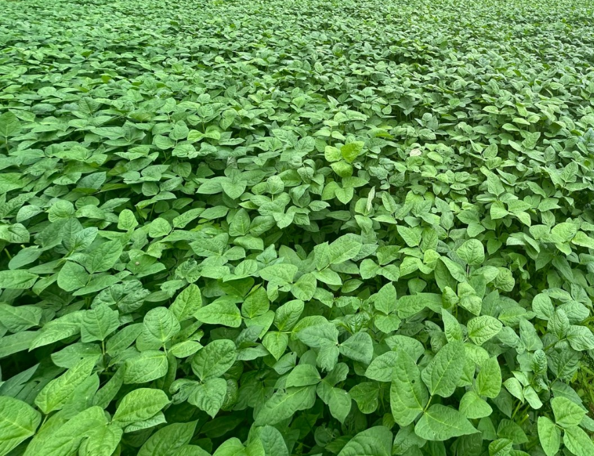
Iron and Clay cowpeas are among the most commonly planted summer food plot species in Georgia. They germinate quickly, produce high protein forage during antler development, and are readily consumed by deer. The name comes from the parent lineages used in their development: the Iron lineage was noted for disease tolerance, while the Clay lineage performed well on heavier clay soils common in the South.
Cowpeas also offer flexibility in establishment timing providing a long summer planting window. If drought delays planting or causes an early stand failure, they can be planted later in the summer and still produce quality forage through archery season up to the first frost. In many cases, cowpeas function as an insurance crop when conditions aren’t favorable for soybeans or other food plot choices, they’re just plain reliable.
Figure 1. Mature Iron and Clay cowpea stand showing peak summer forage production.
Cowpeas can also supplement existing perennial food plots. No-till drilling them into established stands of white clover and chicory mixes once spring growth slows adds an annual summer forage component without disturbing the perennials, extending forage availability while preserving long-term plot goals.
Figure 1. Mature Iron and Clay cowpea stand showing peak summer forage production.
Cowpeas can also supplement existing perennial food plots. No-till drilling them into established stands of white clover and chicory mixes once spring growth slows adds an annual summer forage component without disturbing the perennials, extending forage availability while preserving long-term plot goals.
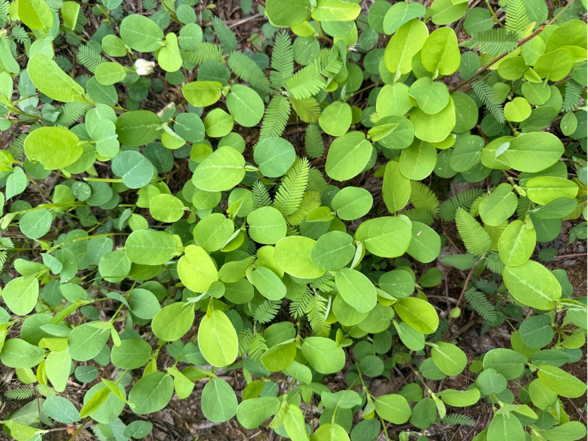
Another strong summer annual legume option is a mixture of alyceclover and American jointvetch. Alyceclover performs best on well-drained upland soils, while jointvetch is one of the few native warm-season legumes used in Georgia food plots and thrives in low lying, moistsoils. Together they cover a wider range of site conditions than either species alone, ensuring you will have something growing and reducing the chances of a failed summer food plot. Both also hold up well under browsing pressure while producing quality forage and fixing nitrogen through the summer, leaving the soil in good shape for cool season fall plantings.
Figure 2. Iron and Clay cowpeas drilled into an established perennial chicory and clover food plot.
Figure 2. Iron and Clay cowpeas drilled into an established perennial chicory and clover food plot.
Another strong summer annual legume option is a mixture of alyceclover and American jointvetch. Alyceclover performs best on well-drained upland soils, while jointvetch is one of the few native warm-season legumes used in Georgia food plots and thrives in low lying, moistsoils. Together they cover a wider range of site conditions than either species alone, ensuring you will have something growing and reducing the chances of a failed summer food plot. Both also hold up well under browsing pressure while producing quality forage and fixing nitrogen through the summer, leaving the soil in good shape for cool season fall plantings.
Figure 3.. Alyceclover and American jointvetch established as a mixed planting.
This pairing also works well alongside cowpeas. Cowpeas establish fast and provide early forage, essentially serving as a nurse crop while alyceclover and jointvetch get established. As browsing pressure or dry conditions thin the cowpeas later in the season, the other two species carry the plot through the rest of summer. The result is a longer forage window and a more dependable food plot under Georgia’s unpredictable summer weather.
Figure 3.. Alyceclover and American jointvetch established as a mixed planting.
This pairing also works well alongside cowpeas. Cowpeas establish fast and provide early forage, essentially serving as a nurse crop while alyceclover and jointvetch get established. As browsing pressure or dry conditions thin the cowpeas later in the season, the other two species carry the plot through the rest of summer. The result is a longer forage window and a more dependable food plot under Georgia’s unpredictable summer weather.
A soil test remains the most important first step in any food plot program. Correcting soil pH, following fertilizer recommendations, and controlling weeds ahead of planting will do more for plot success than seed selection alone.
Food plots are also just one piece of a larger habitat strategy. Native vegetation still carries the bulk of a deer’s diet through most of the year, and practices like prescribed fire, timber thinning, and maintaining diverse early successional habitat in a mosaic landscape often deliver more consistent forage than food plots ever will on their own. Used strategically, warm-season legumes supplement native vegetation, feed soil productivity, and give deer a real nutritional boost through the demanding summer stress period.
Beyond the Beans: Summer Legume Options for Georgia Food Plots
Written by: Dr. James Johnson
Soybeans remain one of the most preferred and highest protein summer forages for white-tailed deer in Georgia. Despite this, they can be challenging to successfully establish and maintain, often requiring exclusion fences to limit early deer access. Heavy browsing pressure, especially on smaller acreage, frequently limits their productivity and reduces their reliability as a standalone food plot crop. Fortunately, there are several legume alternatives to soybeans that provide more consistent performance under a wider range of conditions without the hassle of temporary fencing.
Iron and Clay cowpeas are among the most commonly planted summer food plot species in Georgia. They germinate quickly, produce high protein forage during antler development, and are readily consumed by deer. The name comes from the parent lineages used in their development: the Iron lineage was noted for disease tolerance, while the Clay lineage performed well on heavier clay soils common in the South.
Cowpeas also offer flexibility in establishment timing providing a long summer planting window. If drought delays planting or causes an early stand failure, they can be planted later in the summer and still produce quality forage through archery season up to the first frost. In many cases, cowpeas function as an insurance crop when conditions aren’t favorable for soybeans or other food plot choices, they’re just plain reliable.
Figure 1. Mature Iron and Clay cowpea stand showing peak summer forage production.
Cowpeas can also supplement existing perennial food plots. No-till drilling them into established stands of white clover and chicory mixes once spring growth slows adds an annual summer forage component without disturbing the perennials, extending forage availability while preserving long-term plot goals.
Figure 1. Mature Iron and Clay cowpea stand showing peak summer forage production.
Cowpeas can also supplement existing perennial food plots. No-till drilling them into established stands of white clover and chicory mixes once spring growth slows adds an annual summer forage component without disturbing the perennials, extending forage availability while preserving long-term plot goals.
Another strong summer annual legume option is a mixture of alyceclover and American jointvetch. Alyceclover performs best on well-drained upland soils, while jointvetch is one of the few native warm-season legumes used in Georgia food plots and thrives in low lying, moistsoils. Together they cover a wider range of site conditions than either species alone, ensuring you will have something growing and reducing the chances of a failed summer food plot. Both also hold up well under browsing pressure while producing quality forage and fixing nitrogen through the summer, leaving the soil in good shape for cool season fall plantings.
Figure 2. Iron and Clay cowpeas drilled into an established perennial chicory and clover food plot.
Figure 2. Iron and Clay cowpeas drilled into an established perennial chicory and clover food plot.
Another strong summer annual legume option is a mixture of alyceclover and American jointvetch. Alyceclover performs best on well-drained upland soils, while jointvetch is one of the few native warm-season legumes used in Georgia food plots and thrives in low lying, moistsoils. Together they cover a wider range of site conditions than either species alone, ensuring you will have something growing and reducing the chances of a failed summer food plot. Both also hold up well under browsing pressure while producing quality forage and fixing nitrogen through the summer, leaving the soil in good shape for cool season fall plantings.
Figure 3.. Alyceclover and American jointvetch established as a mixed planting.
This pairing also works well alongside cowpeas. Cowpeas establish fast and provide early forage, essentially serving as a nurse crop while alyceclover and jointvetch get established. As browsing pressure or dry conditions thin the cowpeas later in the season, the other two species carry the plot through the rest of summer. The result is a longer forage window and a more dependable food plot under Georgia’s unpredictable summer weather.
Figure 3.. Alyceclover and American jointvetch established as a mixed planting.
This pairing also works well alongside cowpeas. Cowpeas establish fast and provide early forage, essentially serving as a nurse crop while alyceclover and jointvetch get established. As browsing pressure or dry conditions thin the cowpeas later in the season, the other two species carry the plot through the rest of summer. The result is a longer forage window and a more dependable food plot under Georgia’s unpredictable summer weather.
A soil test remains the most important first step in any food plot program. Correcting soil pH, following fertilizer recommendations, and controlling weeds ahead of planting will do more for plot success than seed selection alone.
Food plots are also just one piece of a larger habitat strategy. Native vegetation still carries the bulk of a deer’s diet through most of the year, and practices like prescribed fire, timber thinning, and maintaining diverse early successional habitat in a mosaic landscape often deliver more consistent forage than food plots ever will on their own. Used strategically, warm-season legumes supplement native vegetation, feed soil productivity, and give deer a real nutritional boost through the demanding summer stress period.