

Written by: Ignazio Graziosi, Assistant Professor of Tree Biology and Health
Photos by: Ignazio Graziosi, Tree Health Lab
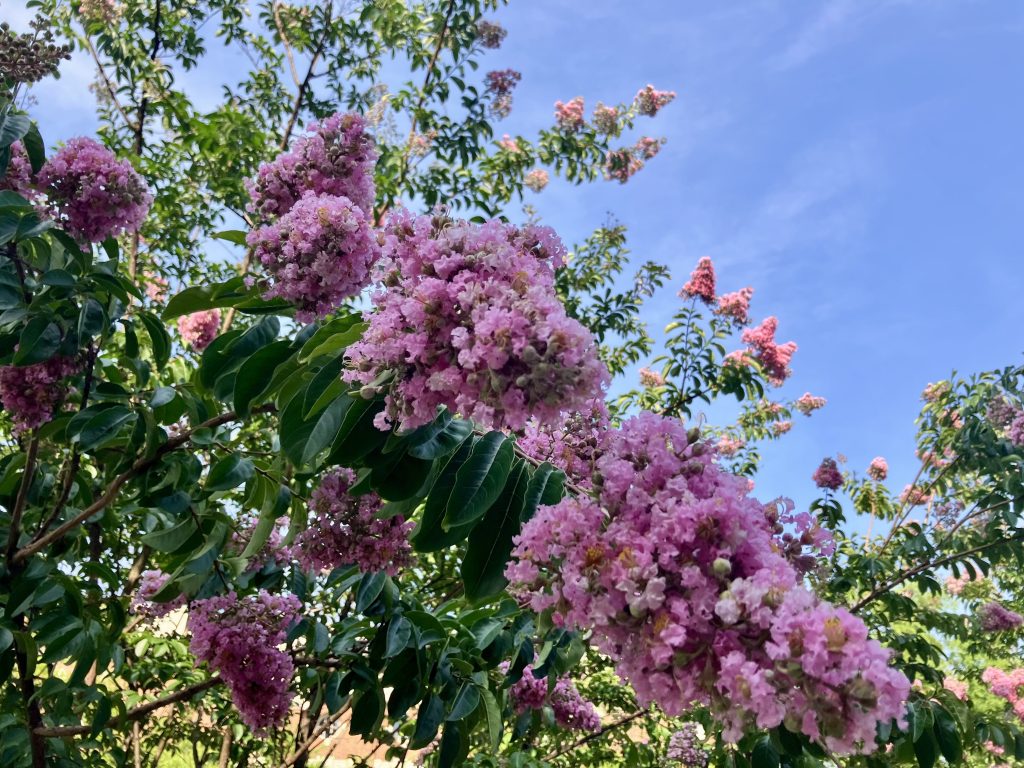
Crape myrtle AKA “the lilac of the south”
The crape myrtle is a beloved shrub and small tree known for its abundant summer blooms, holding a special place in the urban landscape of many cities and towns in the South. With its characteristic bark texture, impressive flower display, production of pollen and nectar, drought tolerance, low maintenance, and resistance to many pests and diseases, this plant provides valuable benefits in addition to its striking looks. The over 60 commonly used cultivars differ in size, flower color, degree of exfoliating bark, and resistance to powdery mildew.
Crape myrtle AKA “the lilac of the south”
The crape myrtle is a beloved shrub and small tree known for its abundant summer blooms, holding a special place in the urban landscape of many cities and towns in the South. With its characteristic bark texture, impressive flower display, production of pollen and nectar, drought tolerance, low maintenance, and resistance to many pests and diseases, this plant provides valuable benefits in addition to its striking looks. The over 60 commonly used cultivars differ in size, flower color, degree of exfoliating bark, and resistance to powdery mildew.
A tiny insect
The crape myrtle bark scale (or CMBS), a non-native insect pest, was first detected in Texas around 20 years ago and reached Georgia in 2014. Since then, it’s been spreading across the state and was found in the Athens–Clarke County area in 2022. The minuscule neonate scales, known as crawlers, disperse throughout the tree and then settle on stems, branches, twigs, and leaf petioles. They feed on the tree’s nutritious sap using their stylet-like mouthparts. As they grow, scale nymphs start producing a felt-like white covering that fully protects them when they are adults and can be seen with the naked eye. Females produce over 200 bright pink eggs enclosed in white ovisacs. In the South, CMBS develops multiple generations, with the first peak of crawlers usually appearing in May and the last in October.
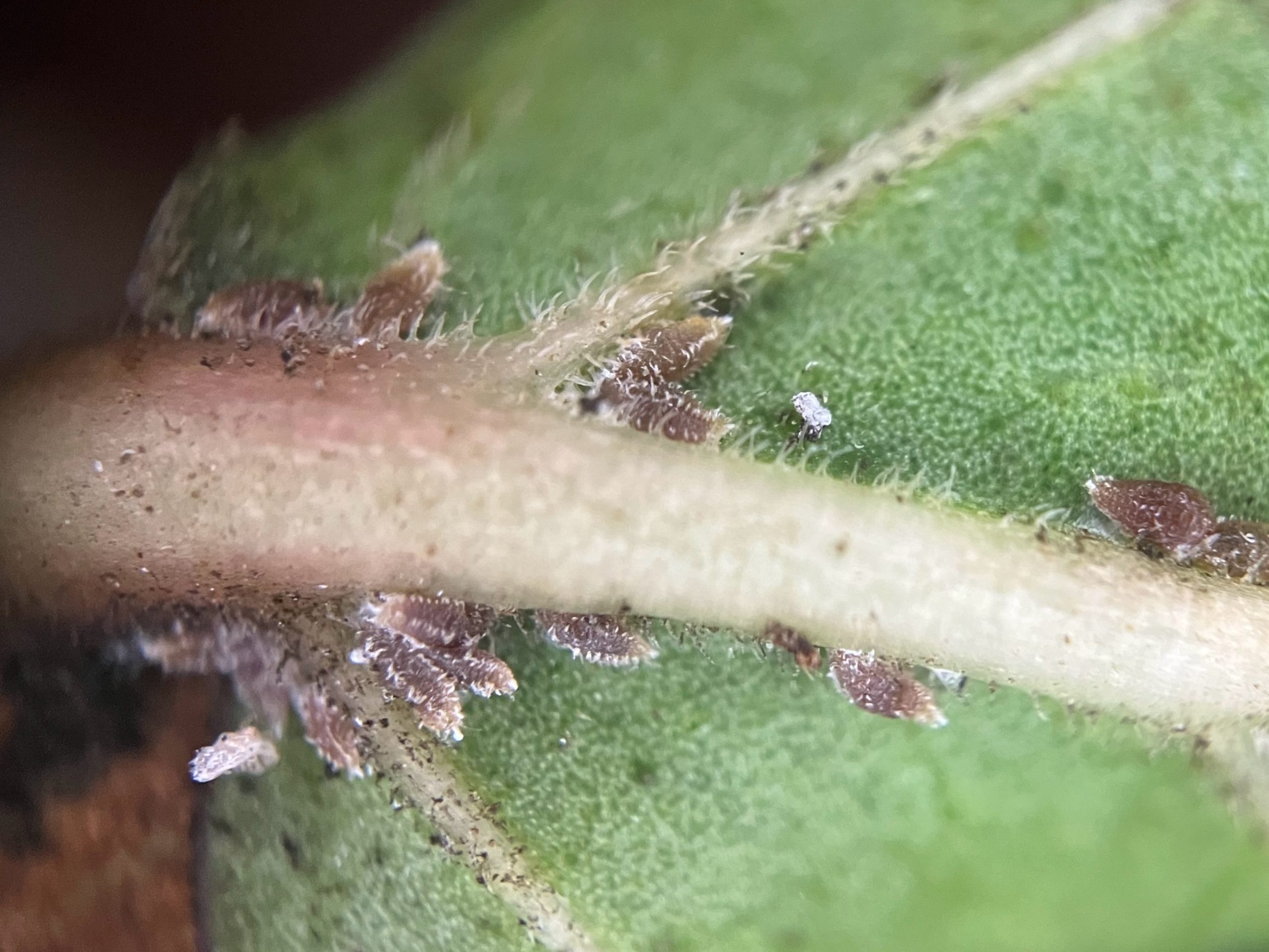


Different stages of the crape myrtle bark scale, or CMBS.
A tiny insect
The crape myrtle bark scale (or CMBS), a non-native insect pest, was first detected in Texas around 20 years ago and reached Georgia in 2014. Since then, it’s been spreading across the state and was found in the Athens–Clarke County area in 2022. The minuscule neonate scales, known as crawlers, disperse throughout the tree and then settle on stems, branches, twigs, and leaf petioles. They feed on the tree’s nutritious sap using their stylet-like mouthparts. As they grow, scale nymphs start producing a felt-like white covering that fully protects them when they are adults and can be seen with the naked eye. Females produce over 200 bright pink eggs enclosed in white ovisacs. In the South, CMBS develops multiple generations, with the first peak of crawlers usually appearing in May and the last in October.
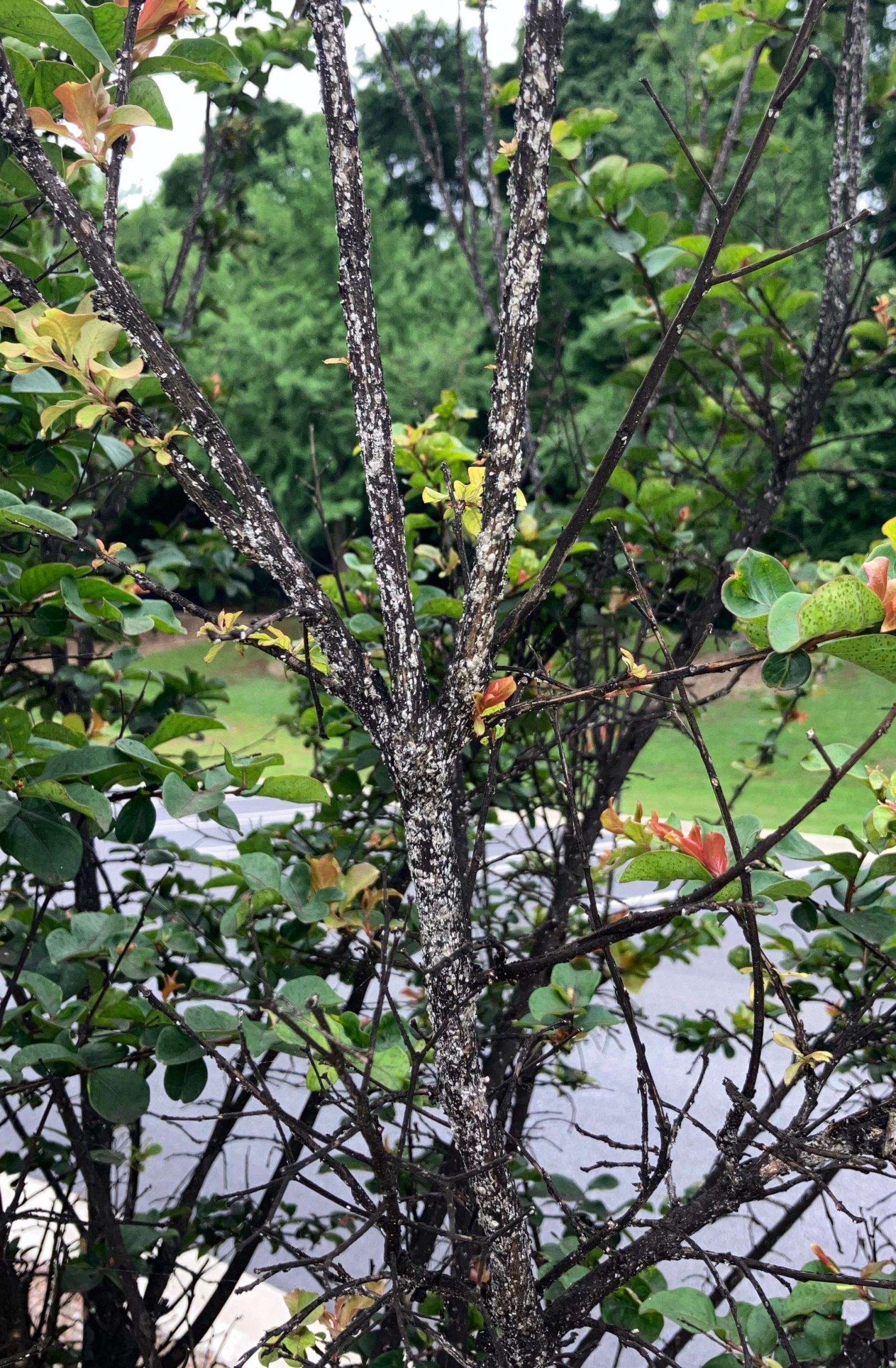
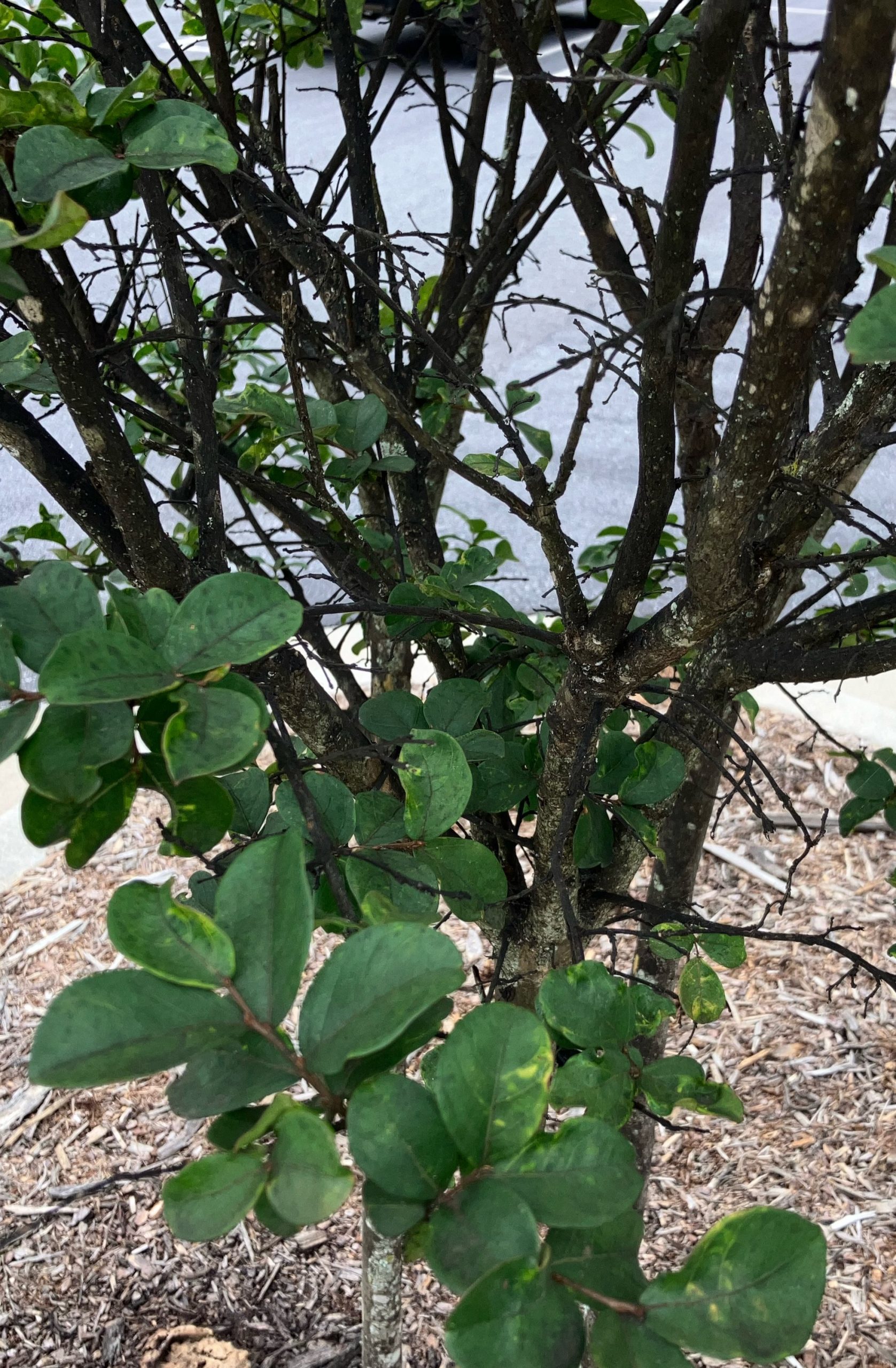
Symptoms of severe CMBS infestation: scale–encrusted branches, dieback, black sooty mold.
A big impact
The scale’s feeding deprives the tree of its nutrients and weakens it considerably, especially if the tree is already stressed by drought or other factors. Black sooty molds grow on the honeydew produced by the scales; this gives the twigs and branches of heavily infested trees a blackish appearance and further stresses the plants. Severe and recurring scale infestations suppress flowering and cause extensive dieback of branches, often forcing the removal of heavily impacted trees. Two native plants were found to be susceptible to being infested by this scale: American beautyberry and Kalm’s St. John’s wort.
A big impact
The scale’s feeding deprives the tree of its nutrients and weakens it considerably, especially if the tree is already stressed by drought or other factors. Black sooty molds grow on the honeydew produced by the scales; this gives the twigs and branches of heavily infested trees a blackish appearance and further stresses the plants. Severe and recurring scale infestations suppress flowering and cause extensive dieback of branches, often forcing the removal of heavily impacted trees. Two native plants were found to be susceptible to being infested by this scale: American beautyberry and Kalm’s St. John’s wort.
What can you do?
Detecting CMBS on trees at low levels of infestation is important to control the scale before it causes extensive damage. Look for white ovisacs on the trunk, branches, and twigs. Topping the tree doesn’t get rid of the scale and stresses the tree further, making things worse. Soil injections or drenches of systemic insecticides, such as dinotefuran and imidacloprid, can be effective in controlling the scale. Ladybeetles, especially the twice-stabbed ladybug, are a common sight on infested trees, where they prey on the scale and act as natural enemies. To provide biological control, commercially available insect predators, such us green lacewings, can be released on infested trees.

What can you do?
Elm leaf beetles feed on elm trees and are most noticeable in late summer. Larvae defoliate elm trees by a feeding pattern called skeletonizing. They chew holes in leaves, leaving brown lacy remains of the leaves on the trees, which is often when people notice their activity. While elms do lose their leaves, they are generally not harmed if heavy infestations do not occur multiple years in a row. There are insecticide management options, but often people don’t notice elm leaf beetle activity until the tree is mostly defoliated.