Written by: Dr. Ginger Orton, Assistant Outreach Professor of Natural Resource Science Communication


On March 26, 2026, nearly 500 tree-loving Athenians gathered in UGA’s Tate Student Center to hear from the entomologist Doug Tallamy, a New York Times best-selling author and professor at The University of Delaware.
Like his book, The Nature of Oaks: The Rich Ecology of Our Most Essential Native Trees, Tallamy took the audience on a month-by-month journey through the life of an oak tree and showcased the incredible web of life oaks sustain. If you weren’t able to make it, here are some of the main takeaways that might change the way you look at oaks.
Oak trees are ecological powerhouses
Not all trees contribute equally to biodiversity. Tallamy explained that native oaks are among North America’s most productive trees, supporting hundreds of species of caterpillars and other insects that form the foundation of the food web. Those insects, in turn, provide essential nutrition for birds, mammals, reptiles, and countless other wildlife.
Blue jays are nature's tree planters
Many of the oak forests we enjoy today owe a debt to blue jays. Each fall, blue jays gather thousands of acorns and bury them as food caches, often forgetting some along the way. Some of those forgotten acorns sprout into new oak trees, making blue jays one of nature’s most effective seed dispersers. Squirrels, woodpeckers, deer, and many other species also rely on acorns as an important seasonal food source.
Oaks don't take as long to make a difference as you might think
A common reason people hesitate to plant oaks is the belief that they take too long to provide the desired benefits. Tallamy challenged this misconception, saying that many oak species grow faster than people realize, especially when planted in the right location. Even young oaks begin supporting insects and wildlife long before they reach their full size, meaning their ecological value starts much earlier than many expect.
Acorns vs. saplings
Rather than purchasing larger nursery trees, Tallamy encouraged people to consider planting acorns, which can be sourced free-of-charge from current oaks. Young trees grown from acorns often establish stronger root systems, experience less transplant shock, and can ultimately outperform transplanted saplings. Starting small can lead to healthier, more resilient trees in the long run.
Every landscape (no matter how small) can become habitat
One of Tallamy’s overarching messages was that conservation doesn’t stop at parks and forests. Homeowners, neighborhoods, schools, campuses, and communities all have opportunities to restore habitat by planting native species, especially keystone trees like oaks. Small actions, repeated across many properties, can collectively make a meaningful difference for biodiversity.
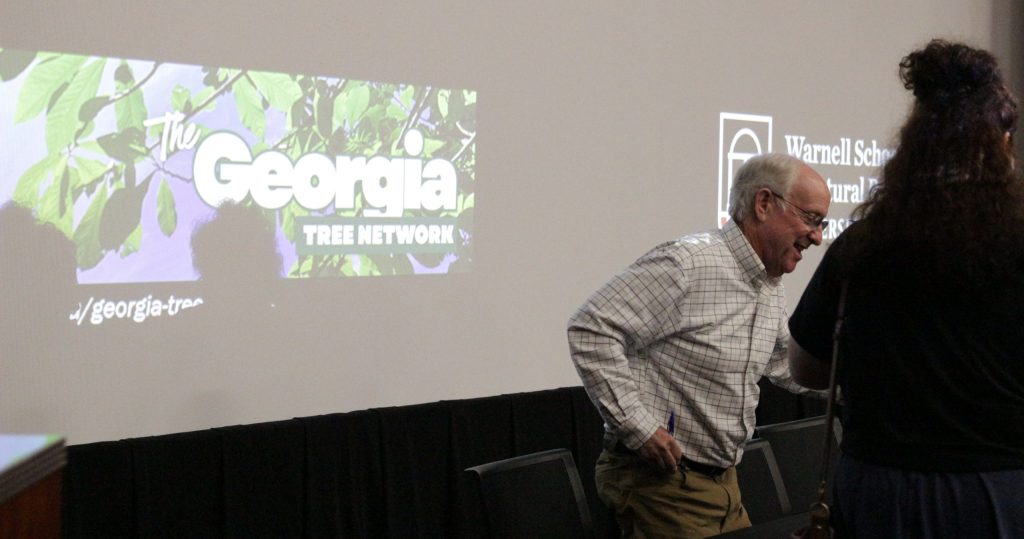
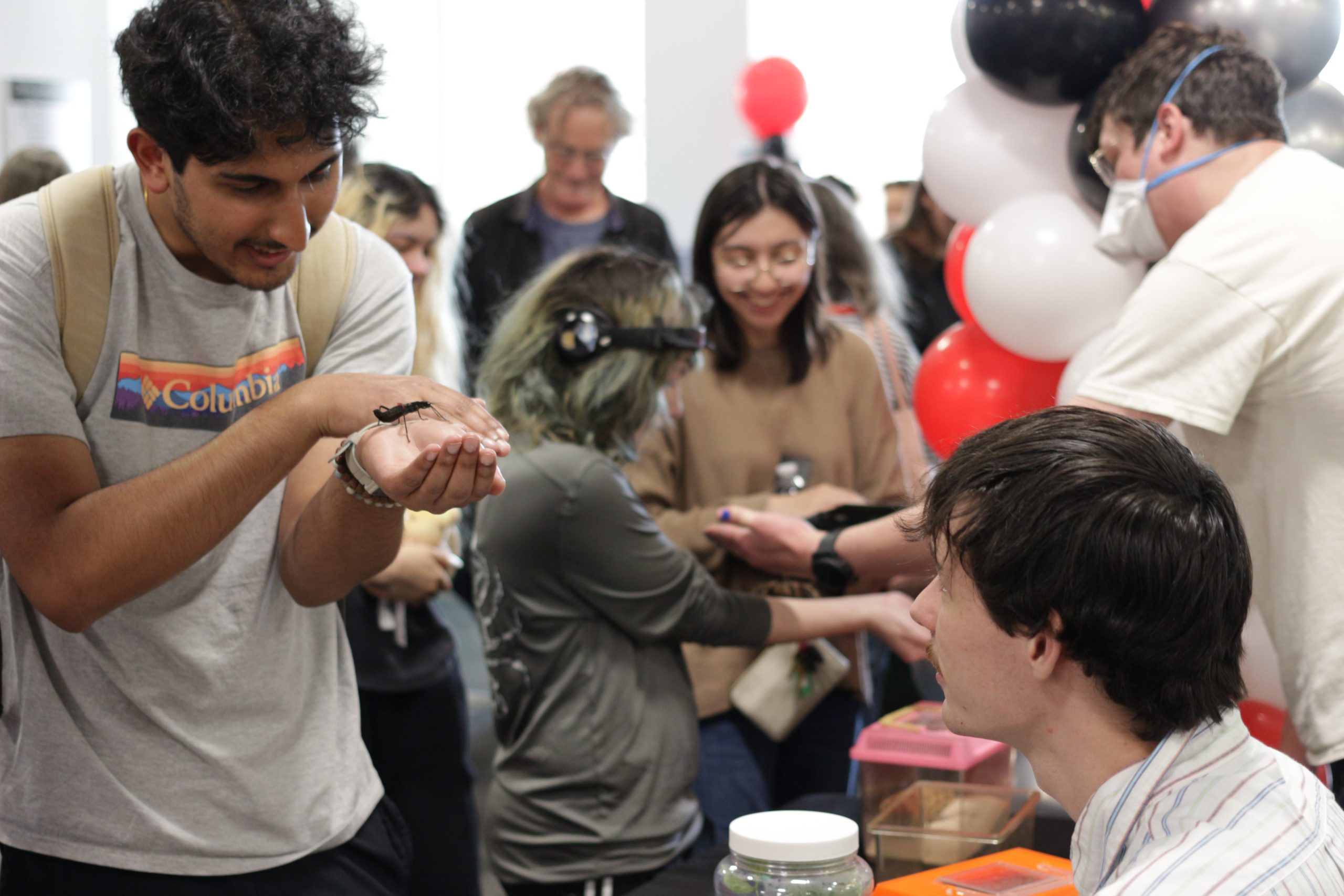
The evening was hosted by the Georgia Tree Network, a Warnell-led coalition of tree professionals, researchers, organizations, and advocates dedicated to fostering healthy, resilient tree ecosystems across the state. Before Tallamy took the stage, attendees also networked with more than 20 local and statewide tree- and nature-focused organizations. The gathering allowed community members to learn about volunteer opportunities, conservation efforts, educational programs, and resources for stewarding Georgia’s natural landscapes.
As the old saying goes, “Mighty oaks from little acorns grow.” Whether you’re planting a single acorn, adding an oak sapling to your landscape, or simply choosing to preserve the mature oaks already around you, every action can help support the rich web of life that depends on these remarkable trees.