
News

Fish Ponds and Drought: Algae, Oxygen, and Dead Fish

Written by: Sarah McNairWesley Gerrin

Drought conditions can negatively impact your fish pond, no matter how big or small it may be. Water temperatures rise and water levels drop. Rising water temperatures stress fish while increasing algae and plant growth. Loss of water concentrates fish and causes further stress. Decreasing water level also reduces the total amount of dissolved oxygen available for all organisms in the pond, including algae and plants. 

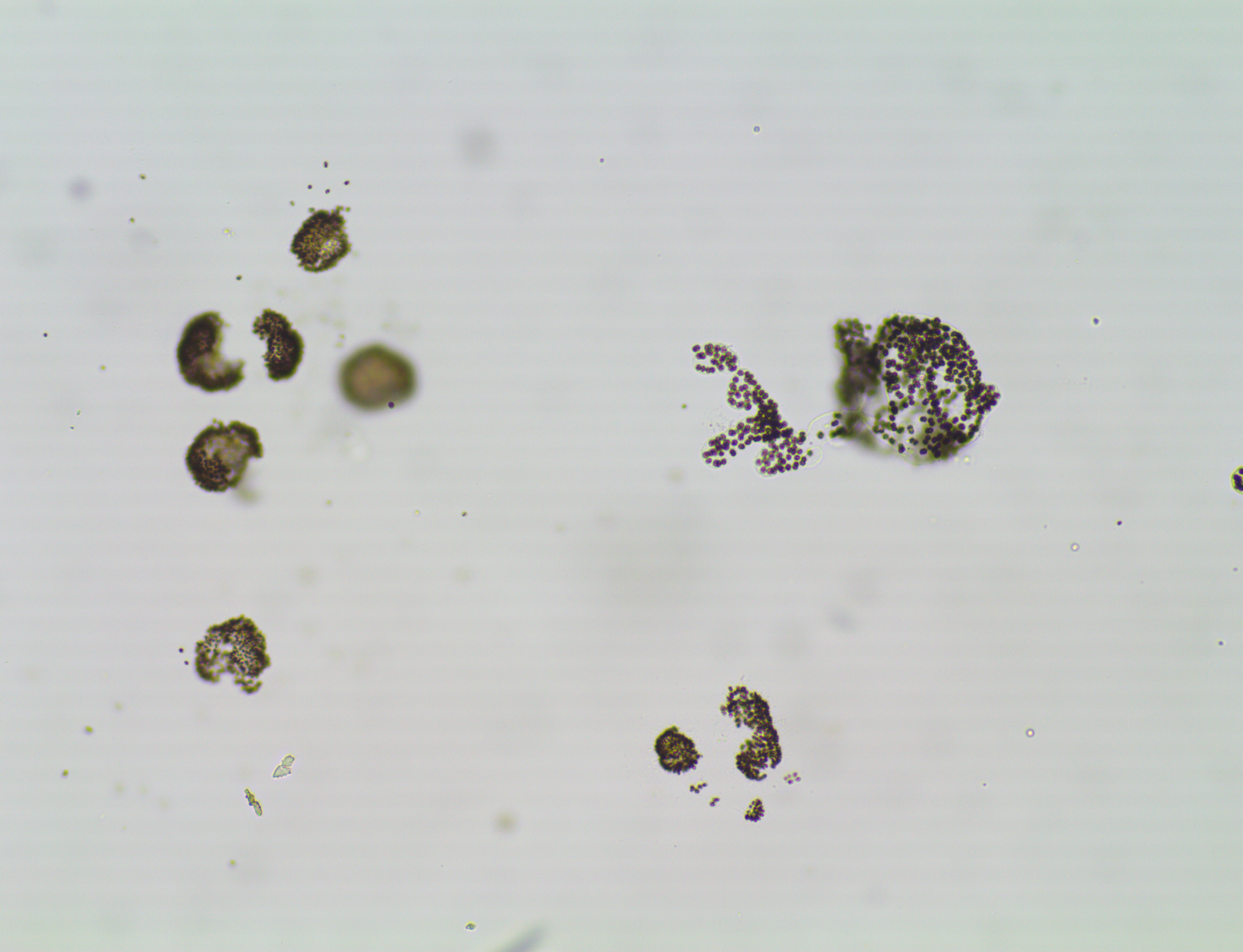
When algae appears and fish die, many landowners are quick to think that there is a harmful algal bloom in their pond. This train of thought is not unwarranted. Many forms of cyanobacteria, also called blue-green algae after their bright appearance, do appear in the summertime and can cause fish kills via toxins. Microcystis, which is most common during the spring and summer, is a particularly potent liver toxin that can cause fish and livestock kills in rare cases. However, fish kills under drought conditions are most likely a result of oxygen depletion events. Algae and aquatic plants produce dissolved oxygen during the day and consume dissolved oxygen at night. During a drought, dissolved oxygen levels are already low due to decreased surface area and increased water temperatures. Fish are also stressed by these conditions. When algae and aquatic plants appear, the demand for dissolved oxygen increases, further stressing the fish and potentially causing an oxygen depletion event if the conditions do not change. 

While algae and aquatic plants may be part of the problem, removing them all at once is inadvisable. Applying algaecide or herbicide across the entire pond can worsen the situation. The process of decomposition also utilizes dissolved oxygen, meaning that even if you do not apply herbicide across your entire pond, you may still have a fish kill.  

Instead, consider management options such as harvesting fish, applying algaecide or herbicide in one part of the pond at a time, or adding supplemental aeration. Fish can be collected in a seine if angling is not possible. With less fish in the pond, there is less competition for dissolved oxygen, and less stress overall. Aeration can provide an “oxygen refuge” for the remaining fish. It is not possible to fully reoxygenate your pond using supplemental aeration. If you do pursue aeration, remember that dissolved oxygen levels are lowest at night, meaning that the aerator must be run overnight if truly want to provide supplemental dissolved oxygen. Aerators should have at least ¾ horsepower per surface acre of water. Remember to recalculate your surface area if the water level has dropped. 

If you are concerned about algae in your pond, consider submitting a “Pond Water Quality and Algae (W34D)” test through your local Extension office. Ensure that algae are present in the sample provided. This allows professionals to identify the exact type of algae present in your pond, which in turn allows for better management of it. For additional information on algal blooms and how to investigate them, please see Investigating Algal Blooms: Important Questions for Landowners. 

Fish Ponds and Drought: Algae, Oxygen, and Dead Fish

Written by: Sarah McNairWesley Gerrin

Drought conditions can negatively impact your fish pond, no matter how big or small it may be. Water temperatures rise and water levels drop. Rising water temperatures stress fish while increasing algae and plant growth. Loss of water concentrates fish and causes further stress. Decreasing water level also reduces the total amount of dissolved oxygen available for all organisms in the pond, including algae and plants. 

When algae appears and fish die, many landowners are quick to think that there is a harmful algal bloom in their pond. This train of thought is not unwarranted. Many forms of cyanobacteria, also called blue-green algae after their bright appearance, do appear in the summertime and can cause fish kills via toxins. Microcystis, which is most common during the spring and summer, is a particularly potent liver toxin that can cause fish and livestock kills in rare cases. However, fish kills under drought conditions are most likely a result of oxygen depletion events. Algae and aquatic plants produce dissolved oxygen during the day and consume dissolved oxygen at night. During a drought, dissolved oxygen levels are already low due to decreased surface area and increased water temperatures. Fish are also stressed by these conditions. When algae and aquatic plants appear, the demand for dissolved oxygen increases, further stressing the fish and potentially causing an oxygen depletion event if the conditions do not change. 
While algae and aquatic plants may be part of the problem, removing them all at once is inadvisable. Applying algaecide or herbicide across the entire pond can worsen the situation. The process of decomposition also utilizes dissolved oxygen, meaning that even if you do not apply herbicide across your entire pond, you may still have a fish kill.  

Instead, consider management options such as harvesting fish, applying algaecide or herbicide in one part of the pond at a time, or adding supplemental aeration. Fish can be collected in a seine if angling is not possible. With less fish in the pond, there is less competition for dissolved oxygen, and less stress overall. Aeration can provide an “oxygen refuge” for the remaining fish. It is not possible to fully reoxygenate your pond using supplemental aeration. If you do pursue aeration, remember that dissolved oxygen levels are lowest at night, meaning that the aerator must be run overnight if truly want to provide supplemental dissolved oxygen. Aerators should have at least ¾ horsepower per surface acre of water. Remember to recalculate your surface area if the water level has dropped. 

If you are concerned about algae in your pond, consider submitting a “Pond Water Quality and Algae (W34D)” test through your local Extension office. Ensure that algae are present in the sample provided. This allows professionals to identify the exact type of algae present in your pond, which in turn allows for better management of it. For additional information on algal blooms and how to investigate them, please see Investigating Algal Blooms: Important Questions for Landowners. 

Categories

Archives