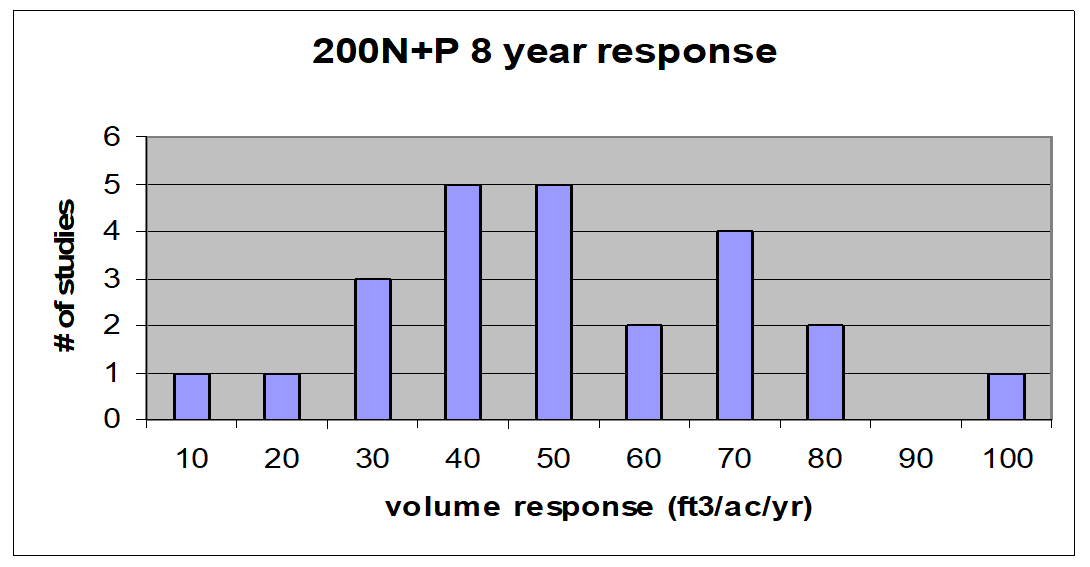
Pine stand response to fertilization and herbicide can vary widely. A single mid-rotation nitrogen and phosphorus (NP) fertilizer application in a loblolly pine stand can vary greatly (Figure 1), from very little growth gains (0.1-0.5 tons per acre per year) to very large gains (1.5-3.0 ton per acre per year for loblolly pine). The response following a single herbicide treatment can vary greatly as well, from insignificant gains (0-0.35 tons per acre year) to very large gains (0.9 to 1.35 tons per acre year) based on loblolly and slash pine studies.
Current (2023) herbicide costs range from $65 to $100 per acre based on competing vegetation species, size and abundance, the herbicides used, and if ground or aerially applied. Current fertilizer prices for a NP application (the most common fertilizer treatment for pines) range from $130 to $200 per acre. Adding potassium (K) fertilizer to a NP application increases the cost by $35-$40 per acre where K is needed.
Loblolly, longleaf and slash pine response to a mid-rotation fertilizer treatment tends to peak four years after application and can last six to eight years. The pine response to a woody control herbicide treatment tends to peak six to eight years after application and can last 12-14 years.
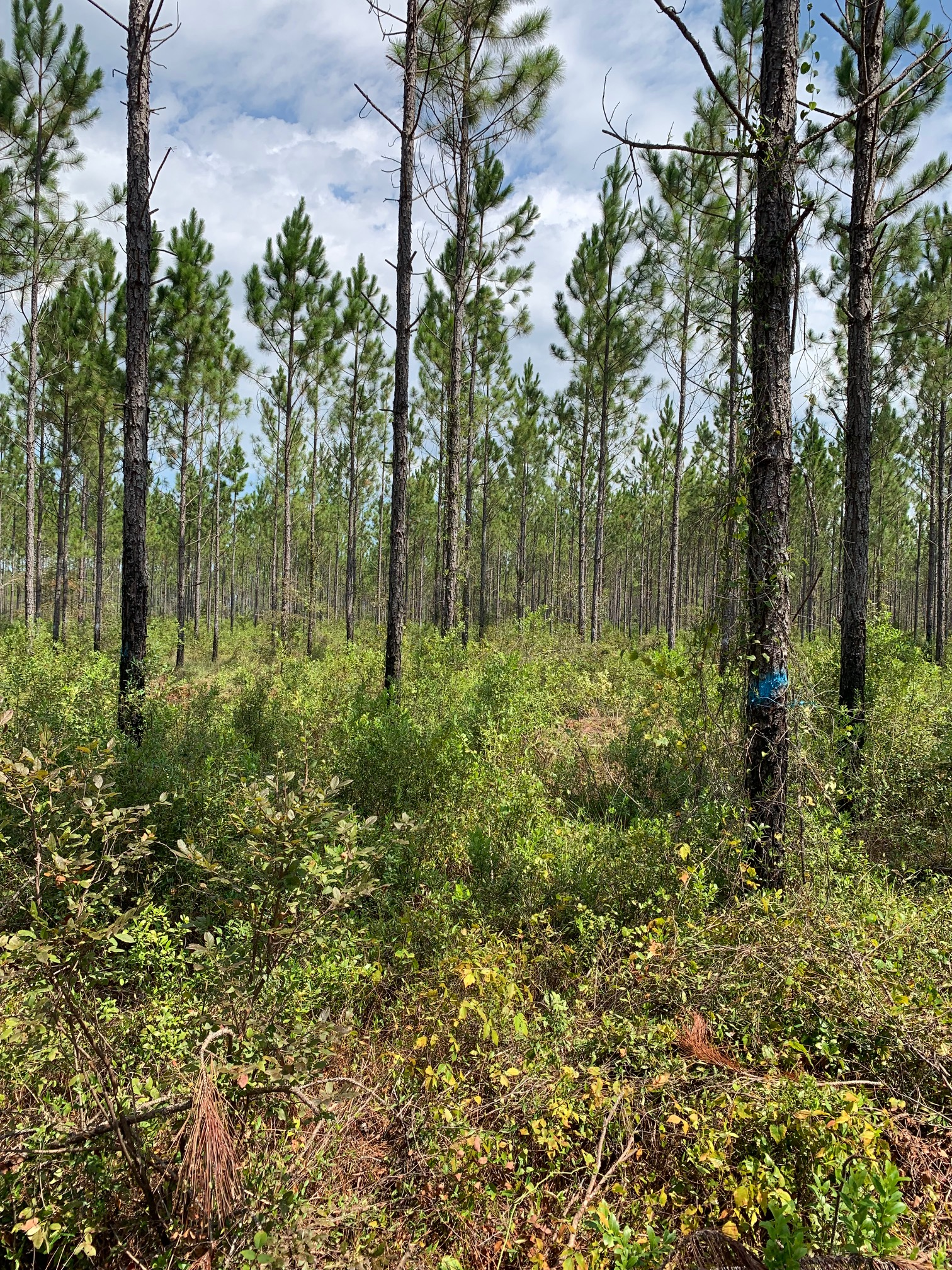
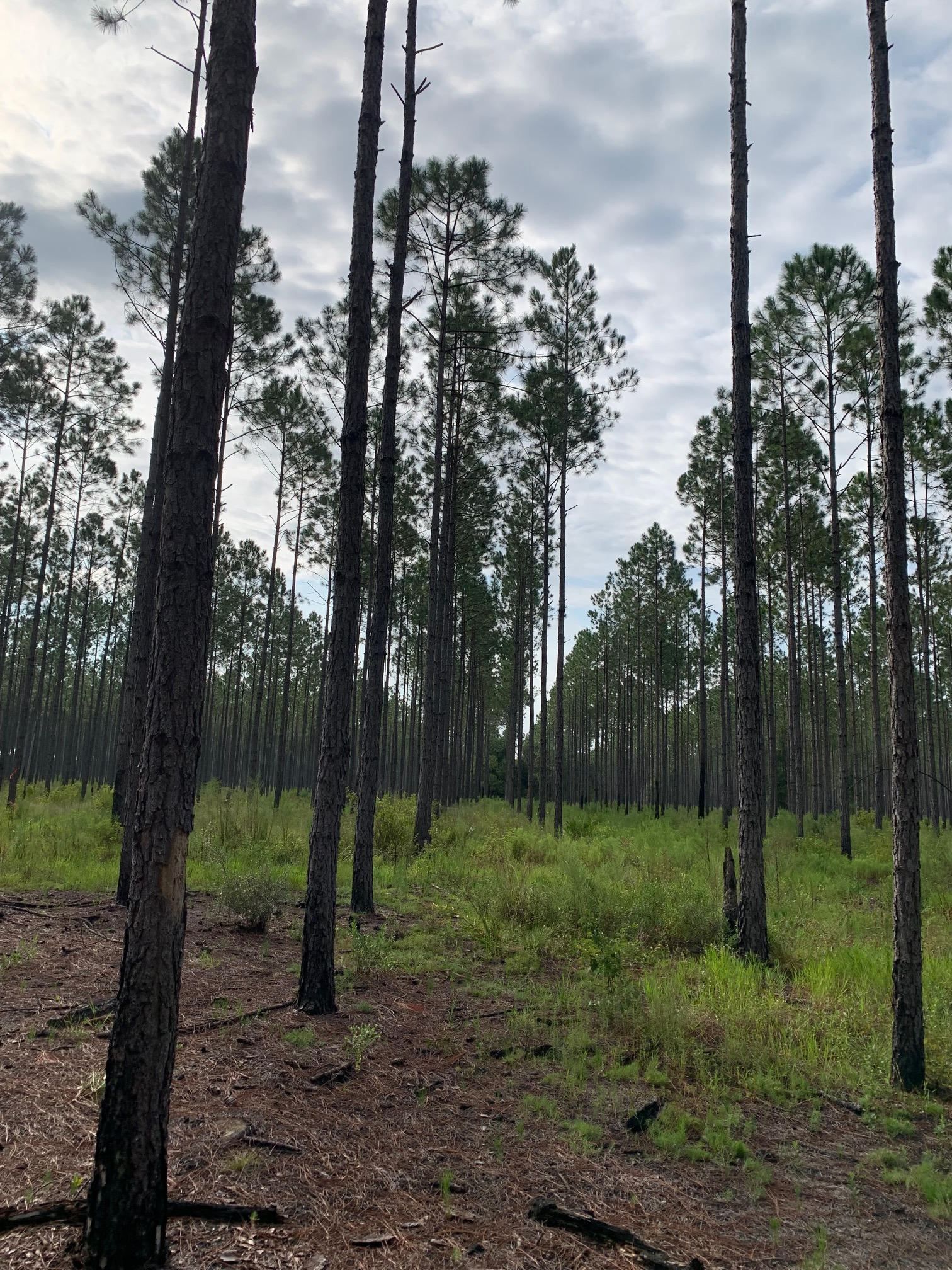
If the woody competition in the thinned pine stand is low (below 200-400 hardwoods per acre or below 33-50% ground cover in the Flatwoods, Photo 2) and it is a cutover site that has been in trees for over 50 years then soil and foliage sampling, summertime leaf area index estimates, and soils knowledge are diagnostic tools to determine if the stand is deficient in N, P and/or potassium (K). If the woody vegetation is above the noted thresholds, then the herbicide treatment is the better choice, as the woody vegetation will take up some of the nutrients applied making it more competitive.
If the thinned stand will receive a second thinning rather than a clearcut (harvesting 100% of the merchantable timber), then the herbicide treatment is the better choice if the woody vegetation is above the hardwood or shrub threshold level discussed previously. Then after the stand is thinned the second time, a fertilizer treatment may be a good option if the next cut is the final harvest.
If you have questions about fertilization or herbicide use to control woody vegetation in mid-rotation, post thinning pines stands, contact the UGA Warnell School of Forestry and Natural Resources Outreach faculty (ddickens@uga.edu or david.clabo@uga.edu).