
Aquatic plants

Controlling Filamentous Algae in Georgia Ponds

Written by: Wesley L. Gerrin, Sarah F. McNair, James L. Shelton

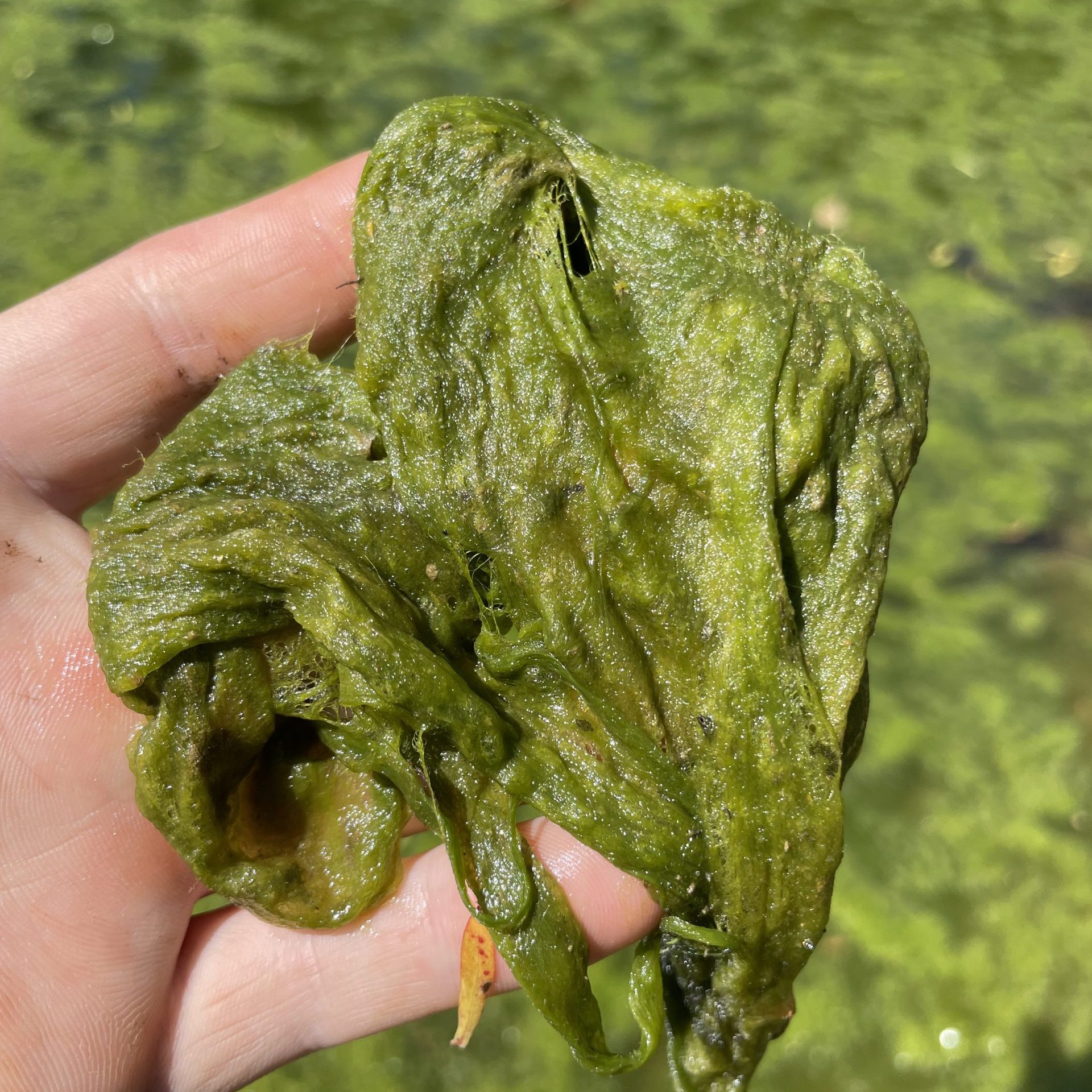
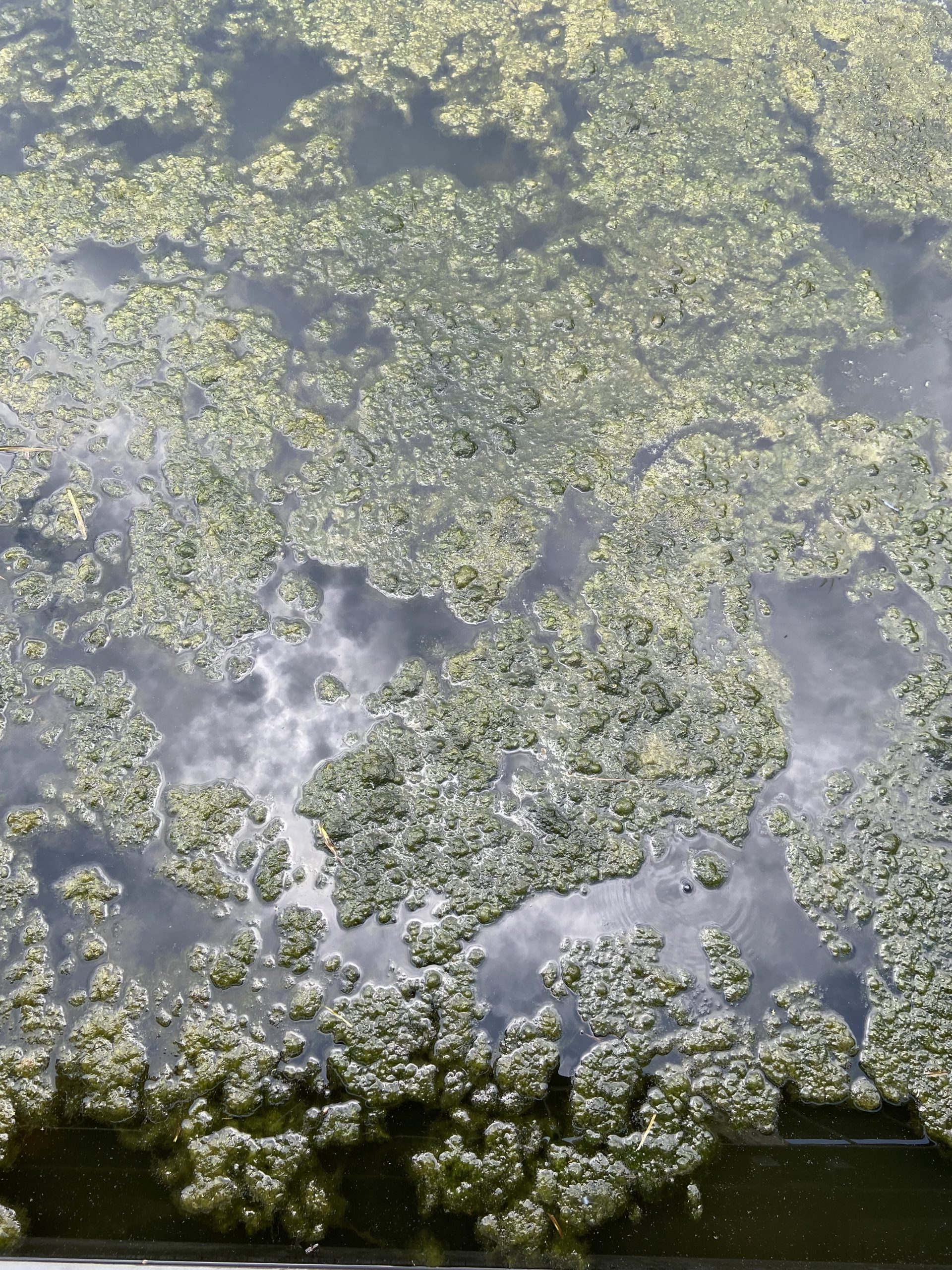
Filamentous algae are a group of algae characterized by their thread-like, filamentous structure, consisting of long chains of cells. The individual filaments are usually thin, hair-like, and can range in length from a few centimeters to several meters. These algae often form green, slimy mats or clumps on the surfaces of water bodies, submerged objects, or along shorelines. Common genera of filamentous algae found in Georgia include Spirogyra, Pithophora, Lyngbya, Anabaena, and Oscillataoria. Spirogyra, the most common filamentous algae found in ponds, have threads that are slimy to the touch and often have trapped air bubbles. Pithophora filaments have a coarse texture similar to horsehair. Lyngbya, Anabaena, and Oscillattoria have a strong musty odor and are known to produce toxins capable of killing fish, livestock, and pets.

Important Characteristics

Coarse, wool-like texture

Interwoven filaments

Mats floating on surface

Similar Species

On the surface, filamentous algae just looks like a green surface scum. Picking some up out of the water will allow identification.
Mechanical Control Methods: physical removal of plant material from the pond

Plant material may be physically removed from ponds using rakes, seines, or nets. These types of mechanical control methods are physically demanding and time consuming, making them difficult to implement. Large harvester machines may also be used but are usually expensive and have the potential to cause other damage to the pond. Most plants can reproduce from fragments that are left behind, so it is difficult to achieve long-term control by physically removing plants.

Biological Control Methods: use of a biological agent that consumes plant material to control vegetation

Grass Carp are not an effective control method for Filamentous Algae.

Chemical Control Methods: use of herbicides or algaecides to control vegetation

The first step when using an aquatic herbicide is to always read the entire label. Herbicide labels are legal documents that provide important information on how to use the product, including which sites can be treated, treatment rates, and precautionary statements. The label is the law! Consult your county cooperative extension agriculture and natural resources agent, professional consultants, or other qualified authorities for help if something is unclear. Click the linked trade names of the herbicides in this document to see their product labels. Trade names are included for example purposes only, and their inclusion in this document does not constitute endorsement of any product.

Always use herbicides in accordance with the directions on the label. The treatment of aquatic plants with herbicide is most effective when the plant is actively growing. Results of treatment are dependent upon many factors including dose, time of year, stage of plant growth, plant susceptibility, method of application, and water movement.

If the weeds are localized to small areas of the pond, all may be treated simultaneously.  If most of the pond is affected, spot treatments that reduce the amount of dead vegetation are suggested. Mass amounts of dead vegetation can deplete oxygen and result in a fish kill. On large infestations, spot treating no more than 1/3 of the total pond is prudent.

Modern treatment plans include practices to reduce the likelihood of developing herbicide-resistant aquatic plants. Strategies may include rotating herbicides with different modes of action, using integrated pest management, applying multiple herbicides concurrently, avoiding repeating treatments too frequently, and consulting with aquatic plant professionals.

Choosing between systemic and contact herbicides depends on the type of aquatic plant, their growth stage, and treatment goals. Systemic herbicides are absorbed and move through the plant’s entire system. Contact herbicides act only on the parts of the plant they touch, so may require multiple treatments to achieve long-term control. Systemic herbicides often act more slowly than contact herbicides. Due to the rapid post-treatment decomposition of plant material, treating large areas with contact herbicides should be avoided to prevent oxygen depletion events and subsequent fish kills.  

For more detailed information regarding chemical selection, chemical application, and calculating chemical treatment rates refer to Integrating Chemicals into Pond Management Plans.

Aquatic herbicides have been evaluated and rated either poor (<70% control), fair (70-79% control), good (80-89% control), or excellent (90-100% control) for controlling certain aquatic plants. The herbicides within the following section were all rated excellent for control of this plant. To see the full herbicide rating table, which includes all available aquatic herbicides, refer to the Aquatic Environments section of the Georgia Pest Management Handbook.

Copper Complexes are granular algaecides and herbicides that contain chelated copper compounds. They are non-selective and will cause direct damage to any plant cell tissues they encounter. Copper complexes can be toxic to fish and other aquatic organisms if used inappropriately. Certain water conditions, including low pH and low alkalinity increase the potential toxicity to non-target aquatic organisms. Pond alkalinity and pH must be tested prior to chemical application, and the rate of application must be adjusted according to the product label.

Cutrine Plus®, K-Tea®, and Captain® are examples of trade names of products that use copper as an active ingredient.

Diquat is a liquid contact algaecide and herbicide. It is non-selective and will cause direct damage to any plant cell tissues it encounters. Its efficacy is lessened in muddy or turbid ponds as the active ingredients are strongly attracted to suspended silt and clay particles. Diquat does have post-treatment use restrictions. Refer to the product label for the complete list of post-treatment use restrictions.

Reward® and Alligare Diquat® are examples of trade names of products that use Diquat as an active ingredient.

Flumioxazin is a contact herbicide that interferes with the ability of plants to produce chlorophyll, causing them to rapidly decompose after treatment. When treating any floating aquatic vegetation with Flumioxazin, a surfactant must be used to reduce surface tension and increase spray coverage.  Flumioxazin is more lethal when making treatments in water with a pH of less than 8.5. It is advantageous to schedule applications in the morning. In heavily vegetated waters, water pH may exceed 8.5 during midday because of the photosynthetic activities of the plants. Adding registered aquatic surfactants to a tank mixed with flumioxazin can help avoid issues caused by high pH levels.

Clipper® is an example of a trade name of a product that uses Flumioxazin as an active ingredient.

Controlling Filamentous Algae in Georgia Ponds

Written by: Wesley L. Gerrin, Sarah F. McNair, James L. Shelton

Filamentous algae are a group of algae characterized by their thread-like, filamentous structure, consisting of long chains of cells. The individual filaments are usually thin, hair-like, and can range in length from a few centimeters to several meters. These algae often form green, slimy mats or clumps on the surfaces of water bodies, submerged objects, or along shorelines. Common genera of filamentous algae found in Georgia include Spirogyra, Pithophora, Lyngbya, Anabaena, and Oscillataoria. Spirogyra, the most common filamentous algae found in ponds, have threads that are slimy to the touch and often have trapped air bubbles. Pithophora filaments have a coarse texture similar to horsehair. Lyngbya, Anabaena, and Oscillattoria have a strong musty odor and are known to produce toxins capable of killing fish, livestock, and pets.

Important Characteristics

Coarse, wool-like texture

Interwoven filaments

Mats floating on surface

Similar Species

On the surface, filamentous algae just looks like a green surface scum. Picking some up out of the water will allow identification.

Mechanical Control Methods: physical removal of plant material from the pond

Plant material may be physically removed from ponds using rakes, seines, or nets. These types of mechanical control methods are physically demanding and time consuming, making them difficult to implement. Large harvester machines may also be used but are usually expensive and have the potential to cause other damage to the pond. Most plants can reproduce from fragments that are left behind, so it is difficult to achieve long-term control by physically removing plants.

Biological Control Methods: use of a biological agent that consumes plant material to control vegetation

Grass Carp are not an effective control method for Filamentous Algae.

Chemical Control Methods: use of herbicides or algaecides to control vegetation

The first step when using an aquatic herbicide is to always read the entire label. Herbicide labels are legal documents that provide important information on how to use the product, including which sites can be treated, treatment rates, and precautionary statements. The label is the law! Consult your county cooperative extension agriculture and natural resources agent, professional consultants, or other qualified authorities for help if something is unclear. Click the linked trade names of the herbicides in this document to see their product labels. Trade names are included for example purposes only, and their inclusion in this document does not constitute endorsement of any product.

Always use herbicides in accordance with the directions on the label. The treatment of aquatic plants with herbicide is most effective when the plant is actively growing. Results of treatment are dependent upon many factors including dose, time of year, stage of plant growth, plant susceptibility, method of application, and water movement.

If the weeds are localized to small areas of the pond, all may be treated simultaneously.  If most of the pond is affected, spot treatments that reduce the amount of dead vegetation are suggested. Mass amounts of dead vegetation can deplete oxygen and result in a fish kill. On large infestations, spot treating no more than 1/3 of the total pond is prudent.

Modern treatment plans include practices to reduce the likelihood of developing herbicide-resistant aquatic plants. Strategies may include rotating herbicides with different modes of action, using integrated pest management, applying multiple herbicides concurrently, avoiding repeating treatments too frequently, and consulting with aquatic plant professionals.

Choosing between systemic and contact herbicides depends on the type of aquatic plant, their growth stage, and treatment goals. Systemic herbicides are absorbed and move through the plant’s entire system. Contact herbicides act only on the parts of the plant they touch, so may require multiple treatments to achieve long-term control. Systemic herbicides often act more slowly than contact herbicides. Due to the rapid post-treatment decomposition of plant material, treating large areas with contact herbicides should be avoided to prevent oxygen depletion events and subsequent fish kills.  

For more detailed information regarding chemical selection, chemical application, and calculating chemical treatment rates refer to Integrating Chemicals into Pond Management Plans.

Aquatic herbicides have been evaluated and rated either poor (<70% control), fair (70-79% control), good (80-89% control), or excellent (90-100% control) for controlling certain aquatic plants. The herbicides within the following section were all rated excellent for control of this plant. To see the full herbicide rating table, which includes all available aquatic herbicides, refer to the Aquatic Environments section of the Georgia Pest Management Handbook.

Copper Complexes are granular algaecides and herbicides that contain chelated copper compounds. They are non-selective and will cause direct damage to any plant cell tissues they encounter. Copper complexes can be toxic to fish and other aquatic organisms if used inappropriately. Certain water conditions, including low pH and low alkalinity increase the potential toxicity to non-target aquatic organisms. Pond alkalinity and pH must be tested prior to chemical application, and the rate of application must be adjusted according to the product label.

Cutrine Plus®, K-Tea®, and Captain® are examples of trade names of products that use copper as an active ingredient.

Diquat is a liquid contact algaecide and herbicide. It is non-selective and will cause direct damage to any plant cell tissues it encounters. Its efficacy is lessened in muddy or turbid ponds as the active ingredients are strongly attracted to suspended silt and clay particles. Diquat does have post-treatment use restrictions. Refer to the product label for the complete list of post-treatment use restrictions.

Reward® and Alligare Diquat® are examples of trade names of products that use Diquat as an active ingredient.

Flumioxazin is a contact herbicide that interferes with the ability of plants to produce chlorophyll, causing them to rapidly decompose after treatment. When treating any floating aquatic vegetation with Flumioxazin, a surfactant must be used to reduce surface tension and increase spray coverage.  Flumioxazin is more lethal when making treatments in water with a pH of less than 8.5. It is advantageous to schedule applications in the morning. In heavily vegetated waters, water pH may exceed 8.5 during midday because of the photosynthetic activities of the plants. Adding registered aquatic surfactants to a tank mixed with flumioxazin can help avoid issues caused by high pH levels.

Clipper® is an example of a trade name of a product that uses Flumioxazin as an active ingredient.

Categories