
Aquatic plants

Controlling Brazilian Waterweed (Egeria densa) in Georgia Ponds

Written by: Wesley L. Gerrin, Sarah F. McNair, James L. Shelton

Brazilian Waterweed (Egeria densa) is a non-native submersed aquatic plant. It may be mistaken for the non-native species Hydrilla, or the native species Elodea. The middle-upper leaves of Egeria grow in whorls of 4-6 leaves, while the lower leaves grow in whorls of 3. Hydrilla leaves have mid-ridge spines that are absent in Egeria. Hydrilla leaves grow in whorls of 4-8, while Elodea leaves grow in whorls of 3.  Egeria has a rapid growth rate, is capable of reproducing by fragmentation, and will multiply from any plant structures that are in the water.

Important Characteristics

Upper-middle leaves grow in whorls of 4-6 along the stem

No mid-ridge spines on the leaves

Similar Species

Egeria can be mistaken for Hydrilla and Elodea. Hydrilla has mid-ridge spines, which are absent in Egeria, and Elodea leaves grow in whorls of 3 along the entire stem.
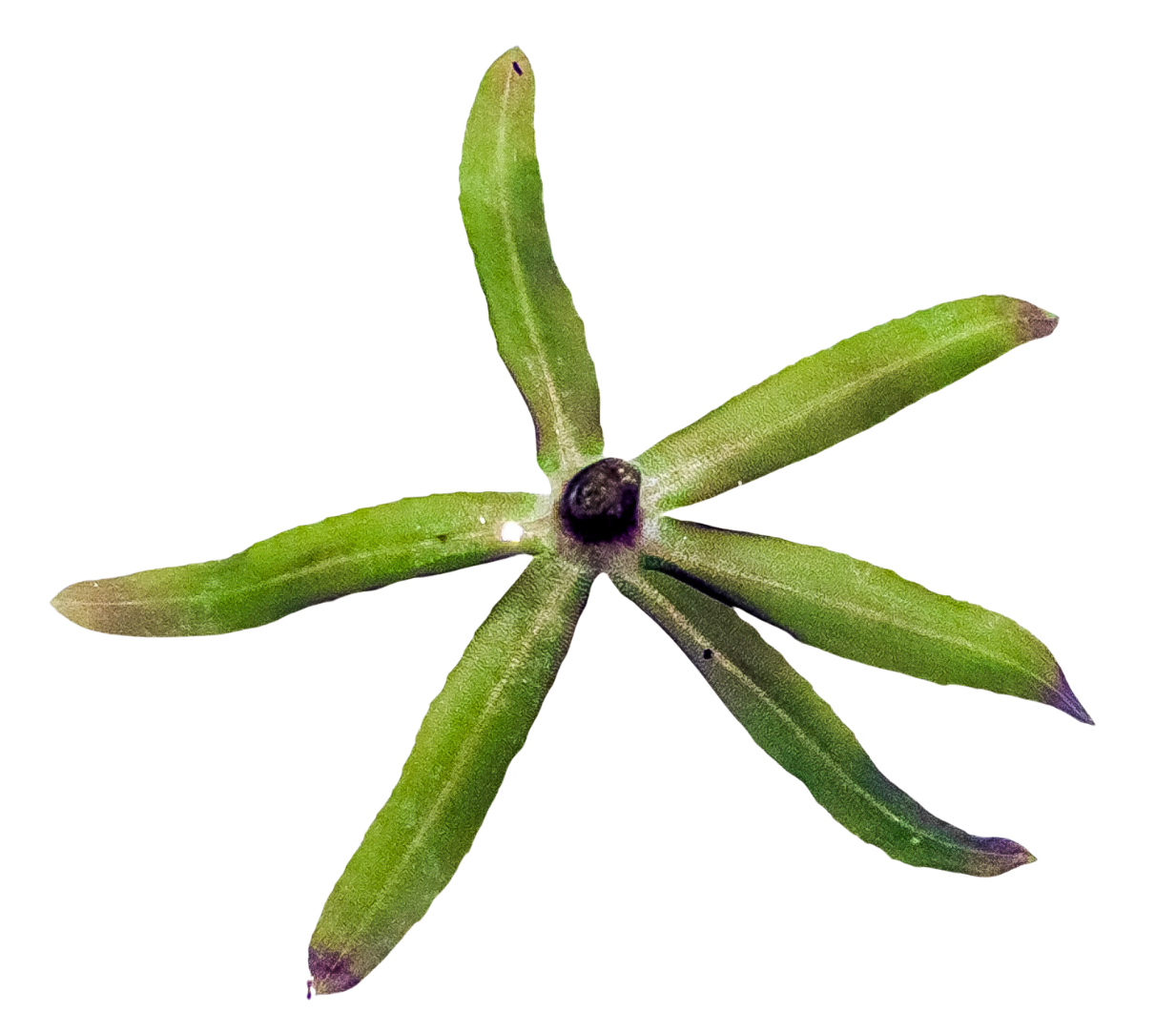
Strand of Brazilian Waterweed

Mechanical Control Methods: physical removal of plant material from the pond

Mechanical control of Brazilian Waterweed is possible, but not feasible as a standalone control method. It can re-establish if any fragments are left behind including stems, roots, and tubers. Gear should be cleaned thoroughly afterwards to ensure that no remnants are spread or reintroduced after removal. Discard the removed plant material in a location away from other bodies of water to ensure that it does not spread.

Biological Control Methods: use of a biological agent that consumes plant material to control vegetation

Grass Carp are an effective biological control mechanism for this plant. Grass Carp are most effective when they are young and must be restocked every 5-7 years to maintain effective control of most aquatic vegetation. Stocking rates vary depending on infestation density, feeding preference, and growth rates of the plants that need to be controlled. Grass Carp are often used as part of integrated pest management plans that also include chemical control. For specific information regarding Grass Carp stocking rates, refer to Integrating Grass Carp into Pond Management Plans.

In Georgia, Grass Carp must be sterile and may only be purchased from licensed suppliers. A list of these suppliers is maintained by the Georgia Department of Natural Resources and is available on the Warnell outreach website.

Chemical Control Methods: use of herbicides or algaecides to control vegetation

The first step when using an aquatic herbicide is to always read the entire label. Herbicide labels are legal documents that provide important information on how to use the product, including which sites can be treated, treatment rates, and precautionary statements. The label is the law! Consult your county cooperative extension agriculture and natural resources agent, professional consultants, or other qualified authorities for help if something is unclear. Click the linked trade names of the herbicides in this document to see their product labels. Trade names are included for example purposes only, and their inclusion in this document does not constitute endorsement of any product.

Always use herbicides in accordance with the directions on the label. The treatment of aquatic plants with herbicide is most effective when the plant is actively growing. Results of treatment are dependent upon many factors including dose, time of year, stage of plant growth, plant susceptibility, method of application, and water movement.

If the weeds are localized to small areas of the pond, all may be treated simultaneously.  If most of the pond is affected, spot treatments that reduce the amount of dead vegetation are suggested. Mass amounts of dead vegetation can deplete oxygen and result in a fish kill. On large infestations, spot treating no more than 1/3 of the total pond is prudent.

Modern treatment plans include practices to reduce the likelihood of developing herbicide-resistant aquatic plants. Strategies may include rotating herbicides with different modes of action, using integrated pest management, applying multiple herbicides concurrently, avoiding repeating treatments too frequently, and consulting with aquatic plant professionals.

Choosing between systemic and contact herbicides depends on the type of aquatic plant, their growth stage, and treatment goals. Systemic herbicides are absorbed and move through the plant’s entire system. Contact herbicides act only on the parts of the plant they touch, so may require multiple treatments to achieve long-term control. Systemic herbicides often act more slowly than contact herbicides. Due to the rapid post-treatment decomposition of plant material, treating large areas with contact herbicides should be avoided to prevent oxygen depletion events and subsequent fish kills.  

For more detailed information regarding chemical selection, chemical application, and calculating chemical treatment rates refer to Integrating Chemicals into Pond Management Plans.

Aquatic herbicides have been evaluated and rated either poor (<70% control), fair (70-79% control), good (80-89% control), or excellent (90-100% control) for controlling certain aquatic plants. The herbicides within the following section were all rated excellent for control of this plant. To see the full herbicide rating table, which includes all available aquatic herbicides, refer to the Aquatic Environments section of the Georgia Pest Management Handbook.

2,4-D is a systemic herbicide that kills plants by causing uncontrolled cell division in the plants’ vascular tissue. 2,4-D is often used as a whole-system treatment because of its ability to quickly spread through an entire pond or lake.

Weedar® and Navigate® are examples of trade names of products that use 2,4-D as an active ingredient.

Diquat is a liquid contact algaecide and herbicide. It is non-selective and will cause direct damage to any plant cell tissues it encounters. Its efficacy is lessened in muddy or turbid ponds as the active ingredients are strongly attracted to suspended silt and clay particles. Diquat does have post-treatment use restrictions. Refer to the product label for the complete list of post-treatment use restrictions.

Reward® and Alligare Diquat® are examples of trade names of products that use Diquat as an active ingredient.

Flumioxazin is a contact herbicide that interferes with the ability of plants to produce chlorophyll, causing them to rapidly decompose after treatment. When treating any floating aquatic vegetation with Flumioxazin, a surfactant must be used to reduce surface tension and increase spray coverage.  Flumioxazin is more lethal when making treatments in water with a pH of less than 8.5. It is advantageous to schedule applications in the morning. In heavily vegetated waters, water pH may exceed 8.5 during midday because of the photosynthetic activities of the plants. Adding registered aquatic surfactants to a tank mixed with flumioxazin can help avoid issues caused by high pH levels.

Clipper® is an example of a trade name of a product that uses Flumioxazin as an active ingredient.

Fluridone is a broad-spectrum systemic herbicide that is available in both liquid and granular forms. It stops the production of carotene, a pigment that protects chlorophyll from sunlight, preventing the formation of carbohydrates the plant needs to live. Plants treated with Fluridone will slowly turn white or pink as chlorophyll is reduced. Fluridone must remain in contact with the plants for at least 45 days to ensure that they do not come back. Rapid water movement or any condition which results in rapid dilution of the product will reduce its effectiveness. It must be applied in the growing season to ensure that it is taken up by plants. Unlike with contact herbicides, oxygen depletion events are not of concern when applying Fluridone, as plant die-off is gradual.

Sonar® and Alligare Fluridone® are examples of trade names of products that use Fluridone as an active ingredient.


Controlling Brazilian Waterweed (Egeria densa) in Georgia Ponds

Written by: Wesley L. Gerrin, Sarah F. McNair, James L. Shelton

Brazilian Waterweed (Egeria densa) is a non-native submersed aquatic plant. It may be mistaken for the non-native species Hydrilla, or the native species Elodea. The middle-upper leaves of Egeria grow in whorls of 4-6 leaves, while the lower leaves grow in whorls of 3. Hydrilla leaves have mid-ridge spines that are absent in Egeria. Hydrilla leaves grow in whorls of 4-8, while Elodea leaves grow in whorls of 3.  Egeria has a rapid growth rate, is capable of reproducing by fragmentation, and will multiply from any plant structures that are in the water.

Important Characteristics

Upper-middle leaves grow in whorls of 4-6 along the stem

No mid-ridge spines on the leaves

Similar Species

Egeria can be mistaken for Hydrilla and Elodea. Hydrilla has mid-ridge spines, which are absent in Egeria, and Elodea leaves grow in whorls of 3 along the entire stem.

Strand of Brazilian Waterweed

Mechanical Control Methods: physical removal of plant material from the pond

Mechanical control of Brazilian Waterweed is possible, but not feasible as a standalone control method. It can re-establish if any fragments are left behind including stems, roots, and tubers. Gear should be cleaned thoroughly afterwards to ensure that no remnants are spread or reintroduced after removal. Discard the removed plant material in a location away from other bodies of water to ensure that it does not spread.

Biological Control Methods: use of a biological agent that consumes plant material to control vegetation

Grass Carp are an effective biological control mechanism for this plant. Grass Carp are most effective when they are young and must be restocked every 5-7 years to maintain effective control of most aquatic vegetation. Stocking rates vary depending on infestation density, feeding preference, and growth rates of the plants that need to be controlled. Grass Carp are often used as part of integrated pest management plans that also include chemical control. For specific information regarding Grass Carp stocking rates, refer to Integrating Grass Carp into Pond Management Plans.

In Georgia, Grass Carp must be sterile and may only be purchased from licensed suppliers. A list of these suppliers is maintained by the Georgia Department of Natural Resources and is available on the Warnell outreach website.

Chemical Control Methods: use of herbicides or algaecides to control vegetation

The first step when using an aquatic herbicide is to always read the entire label. Herbicide labels are legal documents that provide important information on how to use the product, including which sites can be treated, treatment rates, and precautionary statements. The label is the law! Consult your county cooperative extension agriculture and natural resources agent, professional consultants, or other qualified authorities for help if something is unclear. Click the linked trade names of the herbicides in this document to see their product labels. Trade names are included for example purposes only, and their inclusion in this document does not constitute endorsement of any product.

Always use herbicides in accordance with the directions on the label. The treatment of aquatic plants with herbicide is most effective when the plant is actively growing. Results of treatment are dependent upon many factors including dose, time of year, stage of plant growth, plant susceptibility, method of application, and water movement.

If the weeds are localized to small areas of the pond, all may be treated simultaneously.  If most of the pond is affected, spot treatments that reduce the amount of dead vegetation are suggested. Mass amounts of dead vegetation can deplete oxygen and result in a fish kill. On large infestations, spot treating no more than 1/3 of the total pond is prudent.

Modern treatment plans include practices to reduce the likelihood of developing herbicide-resistant aquatic plants. Strategies may include rotating herbicides with different modes of action, using integrated pest management, applying multiple herbicides concurrently, avoiding repeating treatments too frequently, and consulting with aquatic plant professionals.

Choosing between systemic and contact herbicides depends on the type of aquatic plant, their growth stage, and treatment goals. Systemic herbicides are absorbed and move through the plant’s entire system. Contact herbicides act only on the parts of the plant they touch, so may require multiple treatments to achieve long-term control. Systemic herbicides often act more slowly than contact herbicides. Due to the rapid post-treatment decomposition of plant material, treating large areas with contact herbicides should be avoided to prevent oxygen depletion events and subsequent fish kills.  

For more detailed information regarding chemical selection, chemical application, and calculating chemical treatment rates refer to Integrating Chemicals into Pond Management Plans.

Aquatic herbicides have been evaluated and rated either poor (<70% control), fair (70-79% control), good (80-89% control), or excellent (90-100% control) for controlling certain aquatic plants. The herbicides within the following section were all rated excellent for control of this plant. To see the full herbicide rating table, which includes all available aquatic herbicides, refer to the Aquatic Environments section of the Georgia Pest Management Handbook.

2,4-D is a systemic herbicide that kills plants by causing uncontrolled cell division in the plants’ vascular tissue. 2,4-D is often used as a whole-system treatment because of its ability to quickly spread through an entire pond or lake.

Weedar® and Navigate® are examples of trade names of products that use 2,4-D as an active ingredient.

Diquat is a liquid contact algaecide and herbicide. It is non-selective and will cause direct damage to any plant cell tissues it encounters. Its efficacy is lessened in muddy or turbid ponds as the active ingredients are strongly attracted to suspended silt and clay particles. Diquat does have post-treatment use restrictions. Refer to the product label for the complete list of post-treatment use restrictions.

Reward® and Alligare Diquat® are examples of trade names of products that use Diquat as an active ingredient.

Flumioxazin is a contact herbicide that interferes with the ability of plants to produce chlorophyll, causing them to rapidly decompose after treatment. When treating any floating aquatic vegetation with Flumioxazin, a surfactant must be used to reduce surface tension and increase spray coverage.  Flumioxazin is more lethal when making treatments in water with a pH of less than 8.5. It is advantageous to schedule applications in the morning. In heavily vegetated waters, water pH may exceed 8.5 during midday because of the photosynthetic activities of the plants. Adding registered aquatic surfactants to a tank mixed with flumioxazin can help avoid issues caused by high pH levels.

Clipper® is an example of a trade name of a product that uses Flumioxazin as an active ingredient.

Fluridone is a broad-spectrum systemic herbicide that is available in both liquid and granular forms. It stops the production of carotene, a pigment that protects chlorophyll from sunlight, preventing the formation of carbohydrates the plant needs to live. Plants treated with Fluridone will slowly turn white or pink as chlorophyll is reduced. Fluridone must remain in contact with the plants for at least 45 days to ensure that they do not come back. Rapid water movement or any condition which results in rapid dilution of the product will reduce its effectiveness. It must be applied in the growing season to ensure that it is taken up by plants. Unlike with contact herbicides, oxygen depletion events are not of concern when applying Fluridone, as plant die-off is gradual.

Sonar® and Alligare Fluridone® are examples of trade names of products that use Fluridone as an active ingredient.


Categories